1 引言
2 模式强迫数据的构造
3 高原未来植被预测
3.1 植被叶面积指数
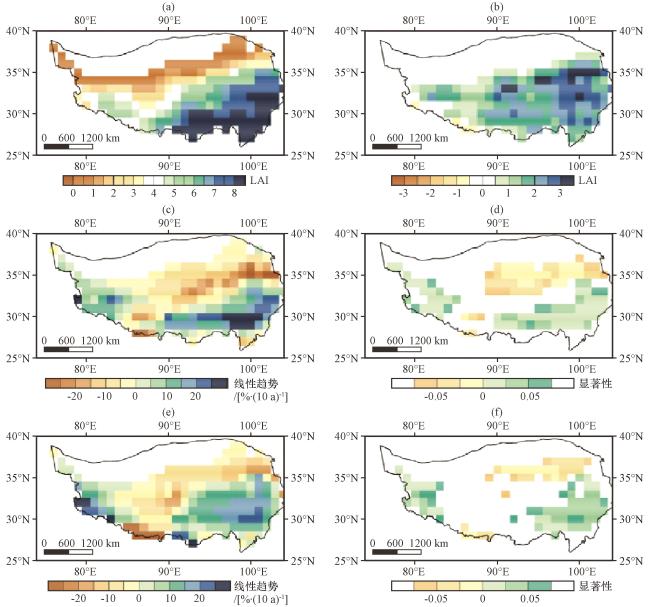
图2 高原生长季(5 -10月)LAI在历史参考期(1981 -2000年)的空间分布 (a) 和未来(2081 -2100年)LAI相对于历史参考期的变化(b)以及历史参考期和未来的线性趋势[c, e, 单位: %·(10a)-1]及其显著性(d, f)Fig.2 LAI during growing season (May-October) and during historical period (1981 -2000) (a) and its change in projection (2081 -2100) relative to historical period (b), and LAI linear trend during historical period and projection [c, e, unit: %·(10a)-1] with their significance (d, f) over QXP |
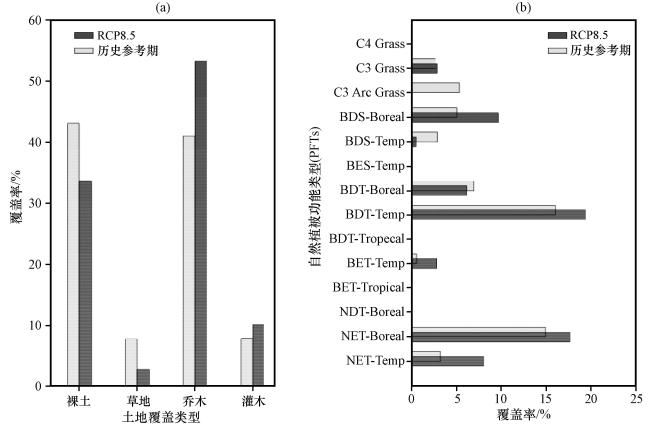
图3 不同时期高原4种主要土地覆盖类型 (a) 及14种自然植被类型覆盖度 (b) 的总量对比图(b)中, NET-Temp指温带针叶常绿林; NET-Boreal指北方针叶常绿林; NDT-Boreal指北方针叶落叶林; BET-Tropical指热带阔叶常绿林; BET-Temp指温带阔叶常绿林; BDT-Tropical指热带落叶阔叶林; BDT-Temp指温带落叶阔叶林; BDT Boreal指北方落叶阔叶林; BES-Temp指温带阔叶常绿灌木; BDS-Temp指温带阔叶落叶灌木; BDS-Boreal 指北方阔叶落叶灌木; C3 Arc Grass 指C3类型的北极草; C3 Grass指C3类型的草; C4 Grass指C4类型的草 Fig.3 The land cover fraction of 4 landuse types (a) and 14 natural PFTs (b) during different periods.In Fig(b), NET-Temp indicates NET-Boreal indicates needleleaf evergreen tree-temperate; NDT-Boreal indicates needleleaf evergreen tree-boreal; BET-Tropical indicates needleleaf deciduous tree-boreal; BET-Temp indicates broadleaf evergreen tree-tropical; BDT-Tropical indicates broadleaf evergreen tree-temperate; BDT-Temp indicates broadleaf deciduous tree-tropical; BDT Boreal indicates broadleaf deciduous tree-temperate; BES-Temp indicates broadleaf deciduous tree-boreal; BDS-Temp indicates broadleaf evergreen shrub-temperate; BDS-Boreal indicates broadleaf deciduous shrub-temperate; BDS Boreal indicates broadleaf deciduous shrub-boreal; C3 Arc grass indicates C3-type arctic grass; C3 grass indicates C3-type grass; C4 grass indicates C4-type grass |
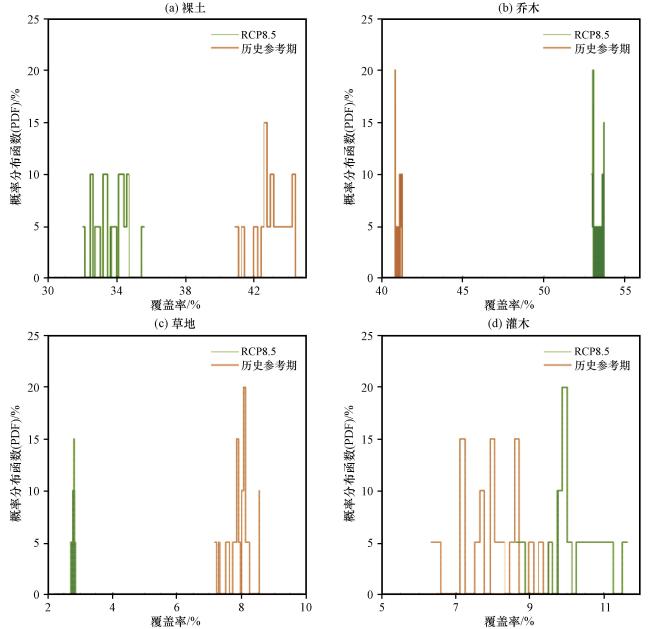
3.2 主要地表类型覆盖度
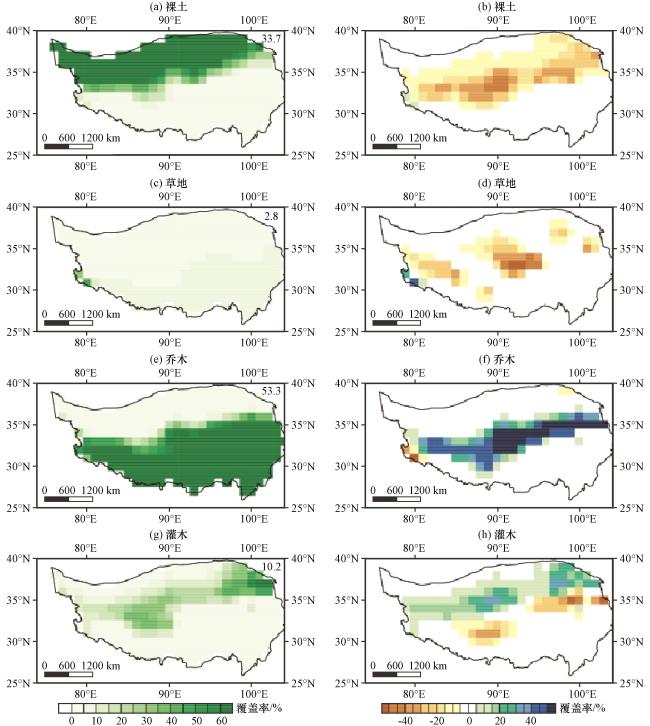
图5 21世纪末最后20年(2081 -2100年)高原4种主要土地覆盖类型的空间分布(左)及其相对于历史参考期的变化(右)左图上方的数值为区域平均的覆盖率(单位: %) Fig.5 Four dominating landuse types over the QXP of last 20 years in the end of 21st century (2081 -2100, left), and changes relative to historical period (right).Numbers of figures on the left panel represent area-averaged fractions (unit: %) |
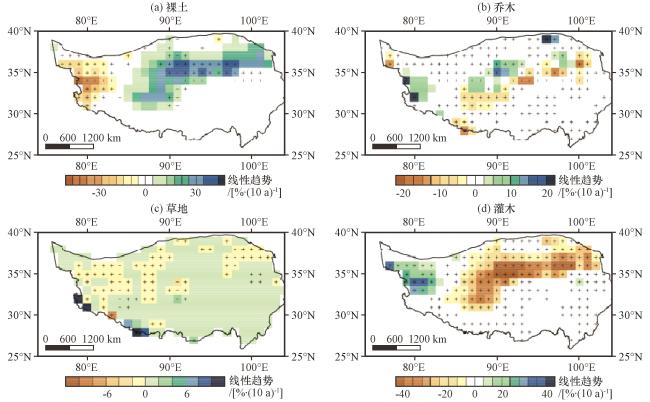
图6 未来高原4种地表主要土地分布类型的线性趋势[单位: %·(10a)-1]Fig.6 Linear trend of four dominating landuse types over the QXP.Unit: %·(10a)-1 |
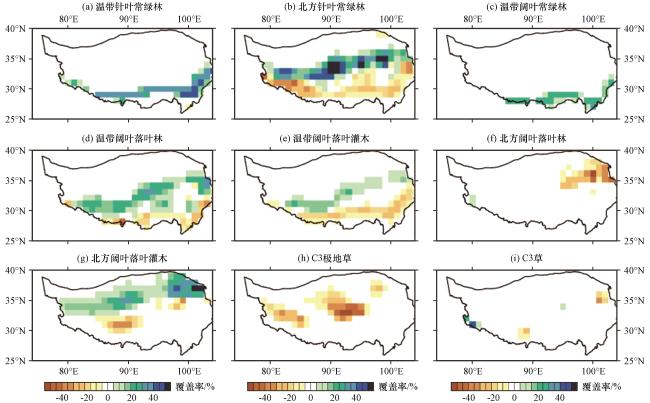
图7 未来高原植被功能类型(PFTs)覆盖率相对于历史时期的变化 (单位: %)Fig.7 Differences of PFTs fraction between projection and historical period.Unit: % |
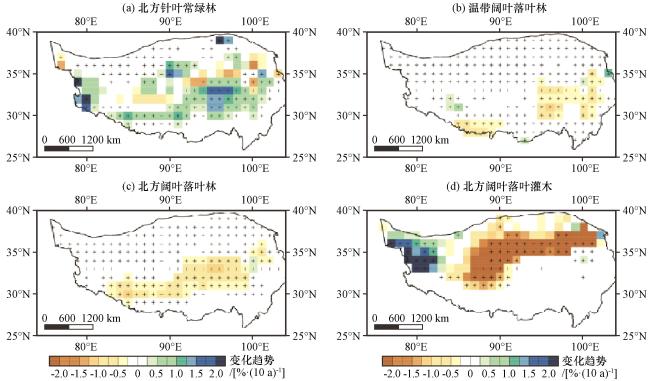
图8 高原未来植被覆盖类型变化趋势[单位: %·(10a)-1]图中“+”区为通过90%信度检验的区域 Fig.8 Projected PFTs changes over the QXP.Unit: %·(10a)-1.Areas with crosses[+]represent regions at 90% confidence level |