1 引言
2 数据来源与方法介绍
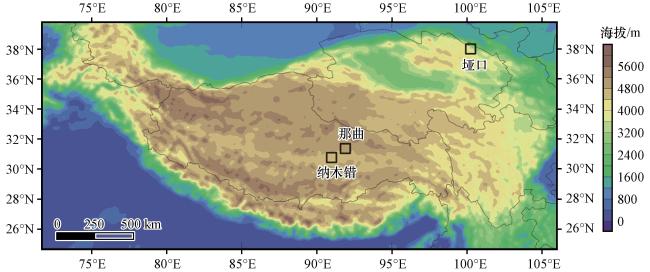
2.1 站点介绍
2.2 数据来源
2.3 地表土壤热通量
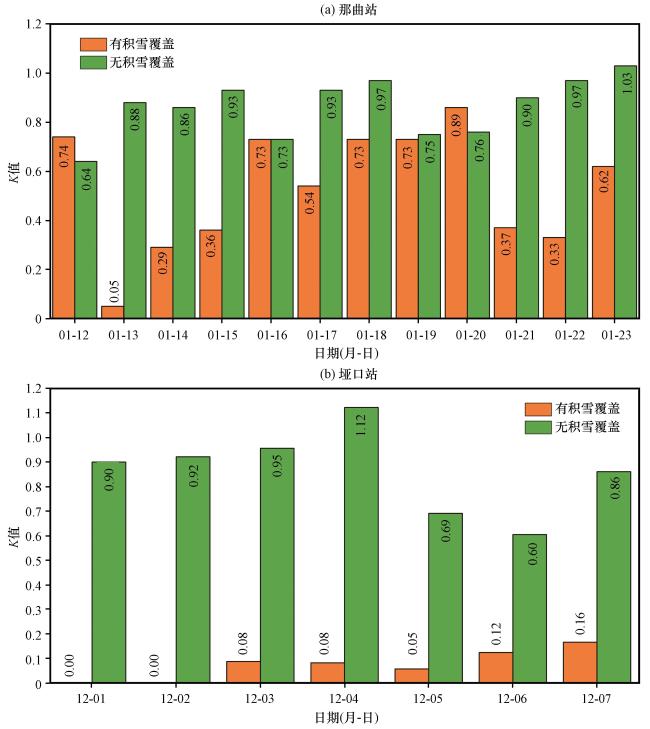
2.4 无量纲数K
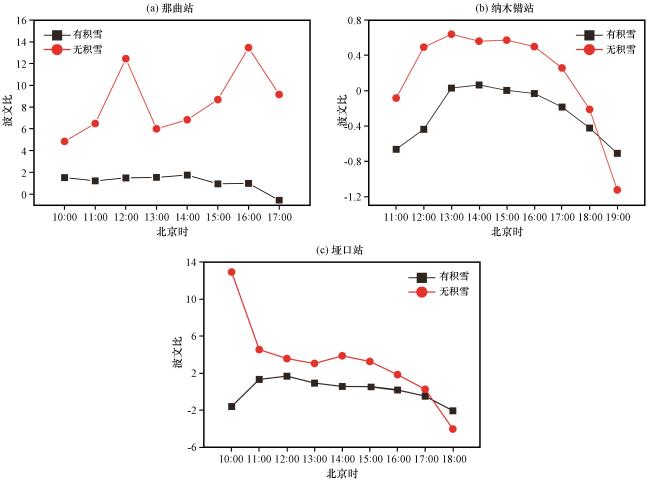
2.5 波文比
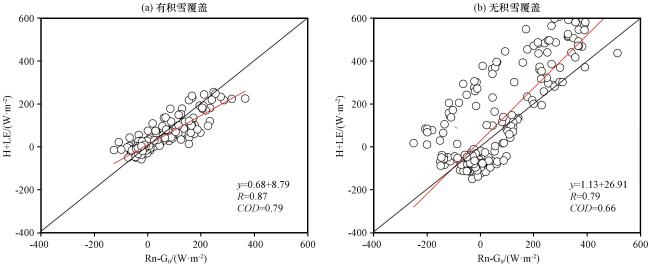
2.5 地表能量闭合率
3 结果分析
3.1 有、 无积雪存在的判断依据
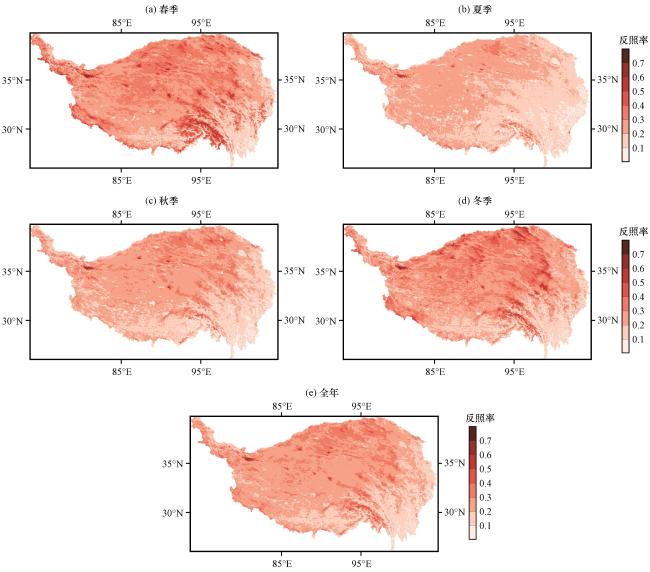
图2 青藏高原各季节及全年地表反照率分布特征(a)春季, (b)夏季, (c)秋季, (d)冬季, (e)全年 Fig.2 Seasonal and annual distribution of surface albedo in the Qinghai-Xizang Plateau.(a) spring, (b) summer, (c) autumn, (d) winter, (e) year |
表1 各季节及全年青藏高原地表反照率数值统计Table 1 Seasonal and annual numerical statistics of surface albedo on the Qinghai-Xizang Plateau |
| 春季 | 夏季 | 秋季 | 冬季 | 全年 | |
|---|---|---|---|---|---|
| 平均值 | 0.26 | 0.20 | 0.21 | 0.25 | 0.22 |
| ≥0.5的占比 | 4.42% | 0.21% | 0.47% | 3.40% | 0.55% |
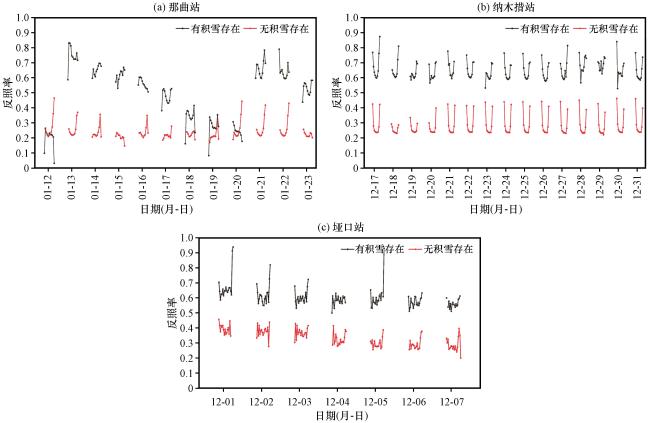
3.2 有、 无积雪下垫面反照率对比
3.3 有、 无积雪下垫面土壤水热协同作用对比
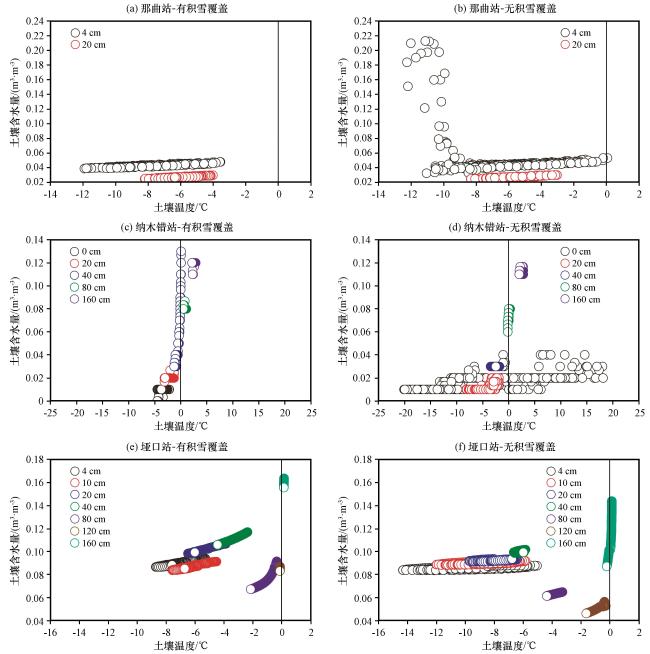
图4 有、 无积雪覆盖时土壤水热协同作用对比(a) 那曲站-有积雪覆盖, (b) 那曲站-无积雪覆盖, (c) 纳木错站-有积雪覆盖, (d) 纳木错站-无积雪覆盖, (e) 垭口站-有积雪覆盖, (f) 垭口站-无积雪覆盖 Fig.4 Comparison of soil water and heat synergistic effects with and without snow.(a) Naqu Station-with snow cover, (b) Naqu Station-without snow cover, (c) Namors Station-with snow cover, (d) Namors Station-without snow cove, (e) Yakou Station-with snow cover, (f) Yakou Station-without snow cove |
3.4 有、 无积雪下垫面能量通量特征对比
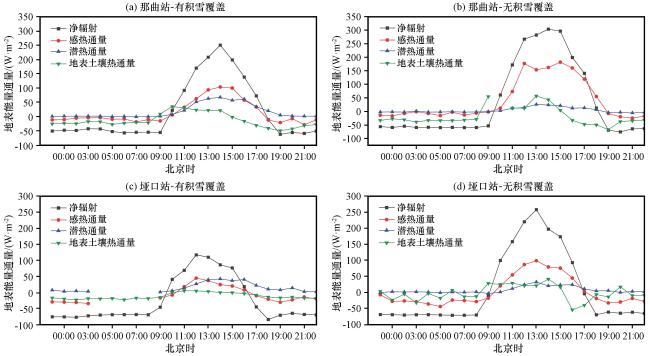
图5 那曲站和垭口站有、 无积雪下垫面地表能量通量特征(a) 那曲站-有积雪覆盖, (b) 那曲站-无积雪覆盖, (c) 垭口站-有积雪覆盖, (d) 垭口站-无积雪覆盖 Fig.5 The surface energy flux characteristics of the underlying surface with and without snow cover at Naqu station and Yakou station.(a) Naqu Station-with snow cover, (b) Naqu Station-without snow cover, (c) Yakou Station-with snow cover, (d) Yakou Station-without snow cover |