
论文

极地冰区海-气湍流热量交换的研究综述

  • 张功 , 1, 2 ,
  • 韩博 , 1 ,
  • 杨清华 1 ,
  • 陈枫壕 1
展开
  • 1. 中山大学大气科学学院,南方海洋科学与工程广东省实验室(珠海),广东 珠海 519082
  • 2. 江西省林业科学院,江西 南昌 330013
韩博(1982 -), 男, 陕西宝鸡人, 教授, 主要从事大气边界层研究. E-mail:

张功(1989 -), 男, 安徽全椒人, 副研究员, 主要从事地气相互作用研究. E-mail:

收稿日期: 2024-05-26

  修回日期: 2025-01-09

  网络出版日期: 2025-09-19

基金资助

国家自然科学基金项目(42305078)

南方海洋科学与工程广东省实验室(珠海)(SML2023SP217)

南方海洋科学与工程广东省实验室(珠海)(SML2022SP401)

南方海洋科学与工程广东省实验室(珠海)(SML2021SP201)

南方海洋科学与工程广东省实验室(珠海)(SML2020SP008)

Review of Research on Air-sea Turbulent Heat Exchange Over Polar Sea Ice Regions

  • Gong ZHANG , 1, 2 ,
  • Bo HAN , 1 ,
  • Qinghua YANG 1 ,
  • Fenghao CHEN 1
Expand
  • 1. School of Atmospheric Sciences,Sun Yat-Sen University,Southern Marine Science and Engineering Guangdong Laboratory (Zhuhai),Zhuhai 519082,Guangdong,China
  • 2. Jiangxi academy of forestry,Nanchang 330013,Jiangxi,China

Received date: 2024-05-26

  Revised date: 2025-01-09

  Online published: 2025-09-19

Copyright

© Editorial Department of Plateau Meteorology (CC BY-NC-ND)

摘要

全球变暖导致南极与北极海冰发生了快速变化, 并引起了一系列气候反馈。在这些反馈过程中, 极区海-气湍流热量交换起到了关键作用。太阳辐射作为极区海表能量的主要来源, 主要用于海冰融化和海-气热量交换, 但海冰较高的反照率导致其对辐射的吸收较小。海-气热量交换受海表与大气的温度梯度、 湿度梯度等影响, 海冰边缘区以显热为主, 距离海冰较远处以潜热为主, 在北极以显热为主, 而在南极以潜热为主, 并且南北极的海-气热量通量均具有季节性特征。海冰在一定程度上会阻碍海-气的热量交换。因此, 准确的海冰区海-气湍流热量交换参数化是模拟海-气相互作用关键, 但受极区环境的限制, 现场观测资料仍然极度稀缺, 精确刻画海冰区的海-气湍流交换依然极具挑战性。在未来研究中, 应加强极区海气通量的观测网络建设, 尤其是海冰区的原位观测, 这对深刻理解极区海气作用对气候变化的影响, 降低气候模式的不确定性至关重要。其次, 充分考虑海冰的动力与热力因素, 进一步优化参数化方案, 或研发新模型, 提高模拟精度。再者, 明确海冰区波浪对海-气湍流热量交换的影响, 补充研究的空白。最后, 进一步评估极区海-气湍流热量交换对气候变化的贡献, 深入揭示极区海洋对气候变化的反馈机制。

本文引用格式

张功 , 韩博 , 杨清华 , 陈枫壕 . 极地冰区海-气湍流热量交换的研究综述[J]. 高原气象, 2025 , 44(5) : 1123 -1132 . DOI: 10.7522/j.issn.1000-0534.2025.00005

Abstract

Global warming has led to rapid changes in the sea ice of the Antarctic and Arctic, triggering a number of climate feedbacks.Turbulent heat exchange between the polar seas and the air plays an important role in these feedbacks.Solar radiation, as the main energy source at the polar sea surface, is mainly used for sea ice melting and air-sea heat exchange, but the higher albedo of sea ice results in low radiation absorption.Air-sea heat exchange is influenced by temperature and humidity gradients between the sea surface and the atmosphere, with sensible heat dominating at the sea-ice edge and latent heat farther from the sea ice.In the Arctic, air-sea heat exchange is dominated by sensible heat, whereas in the Antarctic it is dominated by latent heat.The air-sea heat fluxes at the north and south polar seas vary seasonally.Sea ice can also inhibit air-sea heat exchange to some extent.Accurate parameterization of the turbulent heat exchange between the sea and the atmosphere in the sea ice regions is crucial for simulating air-sea interactions, however, in situ observations remain extremely rare due to limitations of the polar environment, and accurately representing the turbulent air-sea exchange in polar oceans remains a challenge.In the future, the network of air-sea flux measurements in polar seas should be strengthened, especially in the marginal ice zone, which are necessary and crucial for a deep understanding of the role of air-sea interactions in polar regions on global climate change, and for reducing the uncertainty in climate models.Secondly, the dynamics and thermal properties of ice must be fully considered to optimize the parameterization scheme or develop new models to improve the simulation accuracy.Furthermore, the influence of waves on the air-sea heat exchange in the sea ice region should be clarified to fill the research gaps.Finally, the contribution of the air-sea heat exchange to climate change in the polar regions should be evaluated further to improve the understanding of the role of polar oceans in climate change.

1 引言

极地海冰范围的变化导致了极地气候可能处于失稳状态, 影响我国乃至东亚地区的气候(韩笑笑等, 2023王岱等, 2024)。如北极海冰覆盖范围减少导致了海冰边缘区[marginal ice zone, MIZ; 海冰密集度(sea ice concentration, SIC)在15%~85%之间]增大和进入海洋短波辐射显著增加, 影响我国西北地区汛期的降水分布(Overland et al, 2016王岱等, 2024)。南极海冰在季节内和年际尺度的变率增强, 增加了风暴发生频次(Parkinson, 2019)。极区海冰的变化对海-气热量交换的影响受到了广泛关注(England et al, 2020王今菲等, 2021王昀等, 2023)。
极区海-气湍流热量交换与海冰密切相关。一方面, 从海冰区域到开放水面, 海表热力、 动力特征等发生了变化, 导致了海表与大气的温度梯度、 湿度梯度以及风速等的变化(Overland et al, 20002016Yu et al, 2017)。另一方面, 海冰变化直接影响了海洋对辐射的吸收, 导致了海-气热量交换的季节性和年际性波动(Cummins et al, 2023Lique and Steele, 2013Miller et al, 2017)。由于缺乏对上述过程的刻画, 现有数值模式结果与现场观测存在较大偏差(Elvidge et al, 2023Inoue et al, 2011Renfrew et al, 2021)。因此, 准确刻画海冰区海-气湍流热量交换特征与影响机制对提高模式预测精度具有重要意义。
本文回顾了极地冰区海-气热量交换的基本特征与变化趋势, 阐述了海冰区海-气湍流热量交换机制, 并对极区海-气湍流热量交换研究进行了展望, 最后进行了总结, 旨在推动极区海-气湍流交换研究的发展, 提高相关数值模式的预测精度。

2 极地冰区海-气湍流热量交换的基本特征与变化趋势

长波辐射是北极冬季海表能量收支的主要组成, 而短波辐射是北极夏季海表能量的主要来源。整个冬季的净辐射非常稳定, 平均约为-27 W·m-2, 5月净辐射由负转正, 由于7月的反照率较低, 净辐射达到最大值, 并在9月再次变为负值(Lindsay, 1998)。开放水面的热量平衡主要由辐射决定, 海表吸收的净辐射约占总净辐射的50%, 主要用于潜热(latent heat, LH), 并通过长波辐射影响大气的热量; 而海冰吸收的净辐射仅占海表吸收净辐射的6%, 主要用于显热(sensible heat, SH)和海冰融化, 但高纬度(如85°N)区域浮冰的消融主要受LH的影响, 并且冬季从大气向海表的SH传输可减少海表长波辐射引起的能量损失(Bian et al, 2003Jordan et al, 1999卞林根等, 2011张雅斌等, 2000)。当海冰存在或有雪覆盖时, 热量传输发生了衰减, 减小了海水表面与大气的温度差异, 湍流稳定性增强, 影响了SHLH的传输(Persson et al, 2002Sato and Inoue, 2018)。海冰的绝缘作用使海冰覆盖的海表热量保持相对稳定, 但当出现水道时, 开放水面与大气的SH可高达几百瓦每平方米, 这在海气温差可达20~40 ℃的冬季尤为明显(Boisvert et al, 2013)。随着海冰融化或覆盖天数的减少, 进入海洋的辐射增加, 海表与大气的温度梯度变大, 促进了海-气热通量的交换, 导致了更大的SHLHMarcq and Weiss, 2012Massom et al, 2018)。极端情况下, 海冰表面的LH在0~10 W·m-2, 而开放水面的SHLH可能超过100 W·m-2Massom et al, 1998Boisvert and Stroeve, 2015)。通过对漂流冰站40年的观测数据进行小波分析表明, 净辐射具有明显的日周期特征而SHLH没有类似周期现象, 并且SH在冬季为正值, 为7~10 W·m-2LE在冬季接近零(Lindsay, 1998)。
南极海冰增强了海表反照率, 即便是在夏季极昼, 南极冰雪对太阳辐射的吸收也仅为5%~25%(Wiscombe and Warren, 1980)。东南极高原夏季获得太阳辐射占全年总辐射量的58%, 年平均净辐射为-8.7 W·m-2傅良等, 2015)。国际极地年全球协同观测中的结果表明, 中山站年净辐射通量为12.9 W·m-2SH在夏半年(10月至次年2月)为正, 冬半年(3 -9月)为负, 年平均为1.9 W·m-2LH全年为正值, 年平均为11.2 W·m-2; 吸收的短波辐射主要用来融化冰雪并以SHLH方式加热大气(李诗民等, 2010)。由于冰雪覆盖以及地形的差异性, 南极地表热通量也存在差异, 如南极内陆和陆地边缘冰雪全年以SH方式消耗热量, 通过LH方式获得热量(Landy et al, 2014), 但在冬季下降风区域, SH由大气向地表输送, 地表辐射增强, 沿海和内陆高原区域辐射散失的热量和SH受到了限制(Van den Broeke, 2004)。
极地冰区海-气热通量与SIC密切相关。挪威海域的浮冰观测数据也表明, 海-气湍流热通量随距离浮冰边缘的位置而变化, 在冰缘海域SH占主导, 而在距离浮冰较远的位置LH占主导(Brümmer, 1996)。当SIC为0%~20%时, LH平均峰值约为75 W·m-2; SIC为20%~40%时, 平均峰值约为25 W·m-2; 而SIC为80%~100%时, 平均峰值约为-5 W·m-2; 在月平均尺度上, 当SIC大于20%时, SH通常为负值, 而当SIC为0%~20%时, SH约为10 W·m-2Taylor et al, 2018)。北冰洋海-气SHLH受风速、 温度梯度和湿度梯度影响显著, 并且SH与温度梯度呈显著正相关(卞林根等, 20072011)。SIC的减少增加了海表与大气的温度与湿度的垂直梯度差异, 特别是当无冰的水面比海冰表面更加温暖时, 海-气湍流交换会得到增强(Boisvert and Stroeve, 2015)。此外, 北极海域的SHLH具有区域性, 如在卡拉/巴伦支海、 格陵兰岛东部海域和巴芬湾地区, 由于大气比湿的增加, 12月、 1月和2月出现了统计意义上的季节性下降趋势, 但其他地区的LH在年平均尺度上呈现增加趋势(Boisvert et al, 2013Boisvert and Stroeve, 2015)。
南大洋的海-气湍流热通量在1月的净交换为139 W·m-2, 而7月为-79 W·m-2, 并受高纬度冷大气影响存在极端的湍流热量损失事件, 日平均损失可达470 W·m-2Schulz et al, 2012)。净短波辐射向极点逐渐降低, 而净长波辐射向极点逐渐增加。如在10月至次年4月净短波辐射从45°S -65°S减少了75 W·m-2, 其中反照率变化引起的减少约占13 W·m-2; 在亚南极(58°S -43°S), SH不超过5 W·m-2LH占主导地位并且从MIZ边缘附近的小于10 W·m-2逐渐向低纬度增加(Yu et al, 2017)。南大洋夏季LH占主要地位, LH年际变化较小, SH变化大, 受大气环流和洋流的影响, 南大洋的热源和热汇也会发生转变, 但在50°S以南的大部分海域SH为正, 并且SHLH随纬度高、 低交替分布, 其中低值区与海表温度低值槽具有一致性(李诗明等, 1997)。数值产品资料表明, 南大洋海-气交换的SHLH小3~4倍, 海表与大气的温度梯度决定了SHLH的最大值; 由于风速的季节性变化, LHSH最大值出现在冬季, 最小值出现在夏季(Yu et al, 2011)。
综上所述, 太阳辐射作为南北极海表能量的主要来源, 主要用于海冰融化、 SHLH, 但由于海冰较高的反照率, 海冰区域吸收的辐射较小。由于海表与大气的温度梯度、 湿度梯度等影响, 海冰对海-气能量交换影响显著, 这种差异不仅体现在南北极的差异上, 如海-气热量交换在北极以SH为主, 而在南极以LH为主, 而且也体现在距离海冰的位置, 如在冰缘以SH为主, 而距离海冰较远处以LH为主。南北极海-气的SHLH具有季节性变化特征, 同时也受区域位置的影响, 其中南极大陆沿海区域, 辐射和SH会因下降风而受到抑制。此外, 北极放大现象已经明确, 但目前尚未观测到南极放大现象(Cowtan and Way, 2013Smith et al, 2019), 南北极海-气通量的驱动机制仍然需要进一步了解。

3 极地冰区海表湍流热量交换的机制

海冰由于外力作用(如风、 洋流)发生了漂移、 变形、 破裂, 形成了冰间水道, 改变了海冰的分布, 进而改变了海表粗糙度, 影响着SHLHFairall and Markson, 1987Marcq and Weiss, 2012)。海冰的融化与变薄导致海冰更容易被风和洋流驱动, 造成海冰的进一步破碎(刘骥平等, 2021)。此外, 由于冰间湖、 融池以及不断扩大的MIZ区域, 造成了极区海-气热量通量的差异性与不均匀性(图1)。这些变化导致海-气湍流热量交换的动力与热力因素均发生了变化。
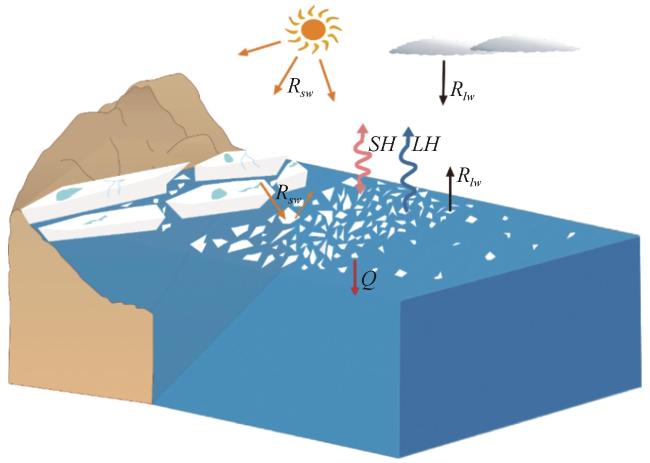
图1 海冰对海-气能量收支影响示意图(改自Bourassa et al, 2013

Rsw 表示太阳辐射, Rlw 为长波辐射, SH是显热通量, LH为潜热通量, Q表示海洋存储的热量

Fig.1 Illustration of the impacts of sea ice on the energy balance between sea and air (modified from Bourassa et al, 2013).Rsw is solar radiation, Rlw is longwave radiation, SH is sensible heat flux, LH is latent heat flux and Q is heat stored in the ocean

海冰和大气之间的SHLH在很大程度上由开放水面上的热通量主导, 冷而干燥的大气和海表通过对流过程直接进行湍流热量交换, 其发生机制如图2所示。即当大气从较冷(即冰)的表面移动到较暖(即水)的表面时, 会形成一个对流边界层, 边界层厚度会随着下风的距离而加深。湍流由垂直风切变(强制对流)和水面附近暖大气与冰表面上方冷大气间的浮力差(自由对流)驱动。当大气柱向水面倾斜时, 原本的逆温和逆湿结构减弱, 甚至转向, 有利于湍流输送的突然增强。
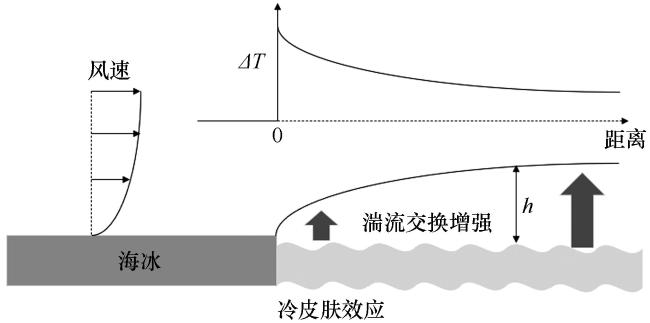
图2 海冰的风速廓线、 冰/水与大气的温差(ΔT)和边界层厚度h的变化图(改自Marcq and Weiss, 2012

Fig.2 Schematic of wind speed profile on sea ice, temperature difference between ice/water and air (ΔT), and variations in boundary layer thickness h (modified from Marcq and Weiss, 2012

当从开放水面或完全海冰覆盖区域向海冰边缘接近时, 风速会出现增大, 并且在开放水面, 海表温度与风速呈现负相关关系, 而在MIZ区域, 海表温度与风速呈正相关(Zhang et al, 2018)。由于MIZ的开放水面与海冰相互接近, 允许冷大气在开放水面上出现平流, 由于大气、 水和冰界面处的热和盐度引起的浮力、 形状阻力和剪切力, MIZ中的热量交换可能会增强(Andreas et al, 2010Loose et al, 2017), 或者海冰减少了风和波浪引起的混合, 抑制了热量交换(Prytherch et al, 2017Zippel and Thomson, 2016)。通常情况下, 海表与大气的温度梯度对SH的影响远大于风速, 但区域水平风速的增加可能会导致更大的SH, 而湿度梯度是LH的主要驱动因子。在MIZ中, 海冰与海水的温度差异较大, 由于冷皮肤效应, 即海水表层(~0.5 mm)的温度低于表层(~50 cm)的温度, MIZ区间的湿度差异小于开放水面, 因此, 温度梯度比湿度梯度更重要(Ruffieux et al, 1995Inoue et al, 2011)。
海冰较高的反照率减弱了MIZ区域辐射能量的输入, 而海冰消融降低了海表的反照率, 使得更多的太阳辐射进入海洋, 促使海冰进一步融化(Vihma et al, 2009)。南大洋冬季, 冰区海-气热量交换比无冰区小2个量级(Massom et al, 1998)。北极季节性海冰区的海气热通量具有较大季节性差异和年际波动, 导致了整个北冰洋近三分之一热量的长期变化(Lique and Steele, 2013)。因此, 随着MIZ的位置和范围的变化, 极区海-气湍流热量交换的影响更加复杂(Taylor et al, 2018Vage et al, 2018)。

4 极地冰区海表热通量研究的展望

数值模式很难给出与观测相一致的短时间尺度(瞬时或每日)的海-气湍流热量交换, 目前大多数气候模型如欧洲中期天气预报中心(ECMWF)和国家环境预测中心(NCEP)的数据产品只能部分合理地描述海冰和海-气湍流热量交换间的关系, 无法很好地描述海冰变化对海-气湍流热量交换的影响, 特别是在LH占主导的浮冰区(Gulev and Belyaev, 2012Vihma, 2014沈辉等, 2019), 这也是极区海-气湍流热通量研究多在月平均尺度上进行的原因之一。迄今为止, 极地冰区的海-气湍流热量交换研究绝大多数采用基于相似理论的整体动力学参数化方案, 如廓线法、 总体输送法以及普适函数法等, 其中总体输送法被认为是北极海-气湍流热通量参数化优选方法之一(李剑东等, 2005)。但这种参数化方案是半经验的, 在实际应用中需结合SIC以及海表状态对海表粗糙度和稳定度函数进行校正(Andreas et al, 2010)。此外, 在气候模式的网格尺度水平上, 如果考虑了冰间水道的影响, 开放水面的平均热量通量提高55%(Marcq and Weiss, 2012)。极地冰区海-气的热量交换复杂且重要, 但在这些区域开展原位观测难度大、 成本高, 组织开展具有较高学科综合性和问题针对性的大型国际观测无疑是提升认知的有效途径。
1997年的北冰洋表面热量平衡计划(Surface Heat Budget of the Arctic Ocean, SHEBA)是北极极具代表性的综合观测试验。SHEBA观测表明, 北极海-气热量交换与海冰性质密切相关, 同时也受温度、 湿度、 云层和边界层稳定性的影响(Duynkerke and Roode, 2001Persson et al, 2002Grachev et al, 2008)。夏季海冰融化、 不连续分布以及漂移, 平衡了大气与海表的温度变化, 导致了北冰洋与周围区域的气候差异, 并且月平均通量变化曲线表明, 近地面大气在冬季变冷, 在夏季变热, 但冬季和7月的SH均为负值(Lique and Steele, 2013Persson et al, 2002康建成等, 1999)。SHEBA的优势在于它几乎完全使用观测值而不是推导值, 受云层等影响, SHEBA站点在秋季和春季有异常大的入射长波辐射, 观测到的SH(-2.2 W·m-2)和LH(1.1 W·m-2)均小于之前的气候学估算值(Persson et al, 2002)。虽然北极的观测数据集在空间和时间上的完整性较高, 但数值模式仍然依赖于少数稀疏观测来进行同化, 而北极海冰区和无冰海洋的表面温度、 气温和湿度、 风速均有偏差, 特别是夏季海冰区的气温、 湿度和风速仍存在较大误差, 影响海-气SHLHBeesley et al, 2000Boisvert and Stroeve, 2015)。以SHEBA为蓝本的北极气候研究多学科漂移观测站(Multidisciplinary drifting Observatory for the Study of Arctic Climate, MOSAiC)提供了欧亚/北大西洋北极地区的全年测量(Frickenhaus et al, 2022Shupe et al, 2022)有望得出更丰富的观测结果。
威德尔海域开展的南极区通量实验(Antarctic Zone Flux Experiment, ANZFLUX)表明, 海冰的不均匀分布对海-气湍流热量交换影响明显(McPhee et al, 1996)。南极海-气热量交换的研究大多是基于有限观测数据, 通过参数化方案或数值模式进行定量描述。如Fairall et al(1996)成功将参数化方案运用到COARE(Coupled Ocean-Atmosphere Response Experiment)模式中, COARE模式已成为目前使用最广泛的海气相互作用模式。Butterworth and Miller(2016a)采用船载涡动相关技术对南大洋湍流热量交换观测, 在开阔水面得到了与COARE 3.0结果高度一致的SHYu et al(2017)利用船载气象资料, 结合COARE 3.0结果进一步确认了海冰对海-气湍流热量分布具有显著影响, 并且认为COARE 3.0估算SHLH的不确定性随着月份的变化而变化。COARE模式的准确性取决于稳定度修正普适函数和地表粗糙度长度(Lu et al, 2013)。稳定度修正普适函数主要通过观测资料拟合得到的半经验公式, 不同的现场试验资料拟合出的稳定度修正普适函数也不同。与开放水面相比, 海冰边缘区由于非均质表面的粗糙度增加, 湍流交换强度也会表现出不同程度的变化, 并且中等SIC(30%~70%)区域湍流交换增加程度最大(Andreas et al, 2010Butterworth and Miller, 2016b)。南极海冰的空间分布差异明显, 更容易向低纬地区移动, 其对海-气湍流热量交换的影响机制与北冰洋海冰存在显著差异(England et al, 2020)。南极海-气湍流热通量在气候学上的不确定性较大, 并且这种不确定性被归结于缺乏高质量的现场观测数据(Yu et al, 2011)。
海冰高反照率和大气温度相互作用形成了冰雪-反照率机制影响海冰的融化, 而海冰的融化与分布也影响着海-气的热量交换(Bintanja and van der Linden, 2013; Taylor et al, 2018王昀等, 2023)。此外, 海冰的生成与消融, 改变了海冰的厚度与密集度, 引起了热力和动力过程的改变, 同时海冰的漂移也会引起湍流热量输送的变化(Spreen et al, 2011)。近几年的研究也开始对浮冰和水道引起的海表粗糙度进行了参数化, 旨在减少数值预报模型中的偏差(Lüpkes and Gryanik, 2015Elvidge et al, 2023)。因此, 研究极地冰区海-气湍流热通量必须考虑海冰与大气间的热力和动力过程, 这也是极地冰区海-气湍流热量交换研究或参数化面临的挑战, 未来研究的重点可从以下几个方面开展。
增强极区海洋现场数据的获取能力, 特别是MIZ区域的观测数据, 补齐观测短板, 丰富基础数据库。虽然遥感卫星可以探测到地表与大气的信息, 但云层限制了卫星观测数据的可用性, 并且目前大多数可见光和红外传感器都难以区分云层和积雪或冰盖(Bourassa et al, 2013)。即便在少数的特定站点进行温度和风速的观测, 由于湍流过程在极区海冰条件下对大气强迫没有线性响应, 通量分布也具有不均匀性, 单独站点观测或模型模拟可以降低较小过程的误差, 而较大尺度过程的研究则主要通过合适的参数化来解决(Bourassa et al, 2013Spengler et al, 2016), 对观测数据提出了更高的要求。近年来, 涡动相关技术在SHEBA和MOSAiC等极地大型观测试验中的成功应用意味着极区海-气湍流交换直接观测具有可行性。涡动相关方法也已借助科考船的优势, 成功实现了MIZ区域的海气湍流通量的走航观测(Butterworth and Miller, 2016bPrytherch et al, 2017)。因此, 在极区海洋开展走航观测是未来研究重点之一。
充分考虑海冰对海-气湍流热量交换的动力与热力因素, 探寻更加精确可靠的参数化方案或预测模式, 提高模拟精度, 减少模型误差。目前的数值模式由于缺乏观测约束, 同时出于节约计算成本考虑, 目前采用的参数化过于经验化(Grachev et al, 2008Li et al, 2015), 极区的气候过程通常发生在连续空间和时间尺度上, 数值预报产品无法描述较小空间尺度的热量突变, 而这些小尺度通常对不同类型的表面边界过程至关重要, 而在数百至数千公里的天气过程中, 数值预报产品也受到参数化和相关物理假设的限制(Gulev and Belyaev, 2012)。因此, 高度可变的风速和复杂的海表状态的粗糙度参数以及稳定度修正函数需要进一步优化, 这在遥感模型与数值预报模型等数据产品中必然会发挥关键作用。此外, 最近一项的研究根据北极区域的历史观测资料, 通过机器学习预测了海冰上的湍流热量交换, 其结果与MOSAiC观测结果相当一致(Cummins et al, 2023)。这意味着采用机器学习作为边界层过程参数化的替代策略可以在给定的观测数据条件下, 通过统计方法直接推断湍流热量交换与气象因子(如温度、 湿度等)的经验关系具有可行性。基于大数据的机器学习或人工智能的新兴方法有望成为研究极地海冰区海-气热量交换的新方向。
明确海冰区波浪对海-气湍流热量交换的影响机制。海冰有利于维持海洋风浪的平衡, 但随着季节性海冰范围的消退, 风浪得到了增强(Thomson and Rogers, 2014)。波浪增强加速了冰层破坏, 也增加海洋与大气的相互作用(D’Asaro et al, 2014)。波浪改变了海表粗糙度, 尤其在MIZ粗糙度的改变可能导致极地海洋从热盐过程驱动向大气强迫驱动的转变(Rainville et al, 2011)。MIZ的海-气相互作用参数化缺少对波浪的考虑, 通常采用开放水面的参数化(Martin et al, 2014)。然而, MIZ中的波浪与开放水面存在很大不同, 因为波浪在MIZ中不仅受到阻挡, 同时也存在散射或反射(Squire, 2007)。因此, MIZ中波浪的变化很可能改变了海冰的海气交换, 然而目前对此尚无明确的认识。
进一步评估极区海-气湍流热量交换对气候变化的贡献。海-气湍流热量交换有利于促进海冰消融, 产生更多的开放水面来引起正反馈, 这种现象在北极更常见。海洋温度的升高, 促进了北极浅海底甲烷的释放(Shakhova et al, 2010Thornton et al, 2020)。在南极, 海冰消融为海洋注入淡水, 减小了水体的密度, 不利于南极底层水的生成, 而南极底层水对气候系统的演变具有重要影响(马浩等, 2012Silvano et al, 2020)。海-气湍流热量交换的变化与海冰的生成与消融密切相关, 而其对上述过程的影响及引起的气候变化效应仍然缺乏相应的评估。

5 总结

随着观测实验的不断开展, 极地海冰区的海-气湍流热量交换的重要特征已得到了证实。如海-气显热和潜热通量并不像短波辐射一样具有日变化特征; 由于冷皮肤效应的存在, 近海表温度梯度对显热、 潜热通量的影响极其显著; 极区海气热通量在海冰边缘以显热为主, 在距离海冰较远处以潜热为主; 海-气热量交换在北极以显热为主, 而在南极以潜热为主。
在极区海气热通量交换中海冰起到了关键作用, 也是当前冰区湍流热通量参数化的关键要素。它不单只是阻碍了海洋与大气的热量交换(包括辐射通量), 同时也通过改变粗糙度, 增加温度梯度等的方式在极区海气热交换中扮演着关键角色。因此, 海冰表面大气湍流热量交换参数化的准确合理是模拟海-冰-气相互作用关键。但由于观测的稀缺, 海冰区海-气热通量研究普遍存在代表性不足、 不确定性大, 甚至结论相反的问题, 这一点在MIZ区域体现得尤为显著。
在未来的研究中, 采用多种观测技术, 增强对极区海洋现场数据, 特别是MIZ区域的观测数据的获取能力, 补齐观测短板, 丰富研究的基础数据库是应对上述挑战的关键步骤。在此基础上, 充分考虑海冰对海-气湍流热量交换的动力与热力因素, 进一步优化参数化方案, 尤其需要明确一些关键物理过程, 如海冰区波浪, 海冰侧向热交换等对整体垂向湍流热交换的贡献。只有解决以上观测和参数化的问题, 才可能准确评估极区海-气热量收支在气候变化的响应特征和潜在的反馈机制。
Andreas E L Horst T W Grachev A A, et al, 2010.Parametrizing turbulent exchange over summer sea ice and the marginal ice zone[J].Quarterly Journal of the Royal Meteorological Society136(649): 927-943.DOI: 10.1002/qj.618 .

Beesley J A Bretherton C S Jakob C, et al, 2000.A comparison of cloud and boundary layer variables in the ECMWF forecast model with observations at Surface Heat Budget of the Arctic Ocean (SHEBA) ice camp[J].Journal of Geophysical Research: Atmosopheres105(D10): 12337-12349.DOI: 10.1029/2000JD900079 .

Bian L G Gao Z Q Lu L H, et al, 2003.Observational estimation of heat budgets on drifting ice and open water over the Arctic Ocean[J].Science in China Series D: Earth Sciences, 46: 580-591.DOI: 10.1007/BF02984536 .

Bintanja R van der Linden E C2013.The changing seasonal climate in the Arctic[J].Scientific Reports, 3: 1556.DOI: 10.1038/srep01556 .

Boisvert L N Stroeve J C2015.The Arctic is becoming warmer and wetter as revealed by the atmospheric infrared sounder[J].Geophysical Research Letters42(11): 2015GL063775.DOI: 10. 1002/2015GL063775 .

Boisvert L N Markus T Vihma T2013.Moisture flux changes and trends for the entire Arctic in 2003-2011 derived from EOS Aqua data[J].Journal of Geophysical Research: Oceans118(C10): 5829-5843.DOI: 10.1002/jgrc.20414 .

Bourassa M A Gille S T Bitz C, et al, 2013.High-latitude ocean and sea ice surface fluxes: challenges for climate research[J].Bulletin of the American Meteorological Society94(3): 403-423.DOI: 10.1175/BAMS-D-11-00244.1 .

Brümmer B1996.Boundary layer mass, water and heat budgets in wintertime cold-air outbreaks from Arctic sea ice[J].Monthly Weather Review125(8): 1824-1837.DOI: 10.1175/1520-0493(1997)1251824: BLMWAH2.0.CO; 2 .

Butterworth B J Miller S D2016a.Automated underway eddy covariance system for air-sea momentum, heat, and CO2 fluxes in the Southern Ocean[J].Journal of Journal of Atmospheric and Oceanic Technology33(4): 635-652.DOI: 10.1175/JTECH-D-15-0156.1 .

Butterworth B J Miller S D2016b.Air-sea exchange of carbon dioxide in the Southern Ocean and Antarctic marginal ice zone[J].Geophysical Research Letters43(13): 7223-7230.DOI: 10.1002/2016GL069581 .

Cowtan K Way R G2013.Coverage bias in the HadCRUT4 temperature series and its impact on recent temperature trends[J].Quarterly Journal of the Royal Meteorological Society683(140): 1935-1944.DOI: 10.1002/qj.2297 .

Cummins D P Guemas V Cox C J, et al, 2023.Surface turbulent fluxes from the MOSAiC campaign predicted by machine learning[J].Geophysical Research Letters50(23): e2023GL105698.DOI: 10.1029/2023GL105698 .

D’Asaro E A Thomson J Shcherbina A Y, et al, 2014.Quantifying upper ocean turbulence driven by surface waves[J].Geophysical Research Letters41(1): 102-107.DOI: 10.1002/2013GL058193 .

Duynkerke P G Roode S T2001.Surface energy balance and turbulence characteristics observed at the SHEBA ice camp during FIRE Ⅲ[J].Journal of Geophysical Research: Atmospheres106(D4): 15313-15322.DOI: 10.1029/2000JD900537 .

Elvidge A D Renfrew I A Edwards J M, et al, 2023.Improved simulation of the polar atmospheric boundary layer by accounting for aerodynamic roughness in the parameterization of surface scalar exchange over sea ice[J].Journal of Advances in Modeling Earth Systems15(3): e2022MS003305.DOI: 10.1029/2022MS003305 .

England M R Polvani L M Sun L T, et al, 2020.Tropical climate responses to projected Arctic and Antarctic sea-ice loss[J].Nature Geoscience13(4): 275-281.DOI: 10.1038/s41561-020-0546-9 .

Fairall C W Markson R1987.Mesoscale variations in surface stress, heat fluxes, and drag coefficient in the marginal ice zone during the 1983 marginal ice zone experiment[J].Journal of Geophysical Research: Oceans92(C7): 6921-6932.DOI: 10. 1029/JC092iC07p06921 .

Fairall C W Bradley E F Rogers D P, et al, 1996.Bulk parameterization of air-sea fluxes for tropical ocean-global atmosphere coupled-ocean atmosphere response experiment[J].Journal of Geophysical Research101(C2): 3747-3767.DOI: 10.1029/95JC03205 .

Frickenhaus S Ransby D Shupe M, et al, 2022.Data from the MOSAiC Arctic Ocean drift experiment[J].Scientific Data, 9: 568.DOI: 10.1038/s41597-022-01678-8 .

Grachev A A Andreas E L Fairall C W, et al, 2008.Turbulent measurements in the stable atmospheric boundary layer during SHEBA: ten years after[J].Acta Geophysica, 56: 142-166.DOI: 10.2478/s11600-007-0048-9 .

Gulev S K Belyaev K P2012.Probability distribution characteristics for surface air-sea turbulent heat fluxes over the global ocean[J].Journal of Climate25(1): 184-206.DOI: 10.1175/2011JCLI4211.1 .

Inoue J Hori M E Enomoto T, et al, 2011.Intercomparison of surface heat transfer near the Arctic marginal ice zone for multiple reanalyses: a case study of September 2009[J].Sola, 7: 57-60.DOI: 10.2151/sola.2011-015 .

Jordan R E Andreas E L Makshtas A P1999.Heat budget of snow-cover sea ice at North Pole 4[J].Journal of Geophysical Research: Oceans104(C4): 7785-7806.DOI: 10.1029/1999JC900011 .

Landy J Ehn J Shields M, et al, 2014.Surface and melt pond evolution on landfast first-year sea ice in the Canadian Arctic Archipelago[J].Journal of Geophysical Research: Oceans119(5): 3054-3075.DOI: 10.1002/2013JC009617 .

Li Y B Gao Z Q Li D, et al, 2015.An update of non-iterative solutions for surface fluxes under unstable conditions[J].Boundary-Layer Meteorology156(3): 501-511.DOI: 10.1007/s10546-015-0032-x .

Lindsay R W1998.Temporal variability of the energy balance of thick arctic pack ice[J].Journal of Climate11(3): 313-333.DOI: 10.1175/1520-0442(1998)0110313: TVOTEB2.0.CO; 2 .

Lique C Steele M2013.Seasonal to decadal variability of Arctic ocean heat content: a model-based analysis and implications for autonomous observing systems[J].Journal of Geophysical Research: Oceans118(4): 1673-1695.DOI: 10.1002/jgrc.20127 .

Loose B Kelly R P Williams W, et al, 2017.How well does wind speed predict air-sea gas transfer in the sea ice zone?A synthesis of radon deficit profiles in the upper water column of the Arctic Ocean[J].Journal of Geophysical Research: Oceans122(5): 3696-3714.DOI: 10.1002/2016JC012460 .

Lu Y X Zhou M Y Wu T W2013.Validation of parameterizations for the surface turbulent fluxes over sea ice with CHINARE 2010 and SHEBA data[J].Polar Research32(10): 291-294.DOI: 10.3402/polar.v32i0.20818 .

Lüpkes C Gryanik V M2015.A stability-dependent parametrization of transfer coefficients for momentum and heat over polar sea ice to be used in climate models[J].Journal of Geophysical Research: Atmospheres120(2): 552-581.DOI: 10.1002/2014JD022418 .

Marcq S Weiss J2012.Influence of sea ice lead-width distribution on turbulent heat transfer between the ocean and the atmosphere[J].The Cryosphere6(1): 143-156.DOI: 10.5194/tc-6-143-2012 .

Martin T Steele M Zhang J L2014.Seasonality and long-term trend of Arctic Ocean surface stress in a model[J].Journal of Geophysical Research: Oceans119(3): 1723-1738.DOI: 10. 1002/2013JC009425 .

Massom R A Harris P T Michael K J, et al, 1998.The distribution and formative processes of latent-heat polynyas in East Antarctica[J].Annals of Glaciology, 27: 420-426.DOI: 10.3189/1998AoG27-1-420-426 .

Massom R A Scambos T A Bennetts L G, et al, 2018.Antarctic ice shelf disintegration triggered by sea ice loss and ocean swell[J].Nature558(7710): 383-389.DOI: 10.1038/s41586-018-0212-1 .

McPhee M G Ackley S F Guest P, et al, 1996.The Antarctic zone flux experiment[J].Bulletin of the American Meteorological Society77(6): 1221-1232.DOI: 10.1175/1520-0477(1996)0771221: TAZFE2.0.CO; 2 .

Miller N B Shupe M D Cox C J, et al, 2017.Surface energy budget responses to radiative forcing at Summit, Greenland[J].The Cryosphere11(1): 497-516.DOI: 10.5194/tc-11-497-2017 .

Overland J E Dethloff K Francis J A, et al, 2016.Nonlinear response of mid-latitude weather to the changing Arctic[J].Nature Climate Change, 6: 992-999.DOI: 10.1038/nclimate3121 .

Overland J E McNutt S Groves J, et al, 2000.Regional sensible and radiative heat flux estimates for the winter Arctic during the Surface Heat Budget of the Arctic Ocean (SHEBA) experiment[J].Journal of Geophysical Research: Oceans105(C6): 14093-14102.DOI: 10.1029/1999JC000010 .

Parkinson C L2019.A 40-y record reveals gradual Antarctic sea ice increases followed by decreases at rates far exceeding the rates seen in the Arctic[J].Proceedings of the National Academy of Sciences of the United States of America116(29): 14414-14423.DOI: 10.1073/pnas.1906556116 .

Persson P O G Fairall C W Andreas E L, et al, 2002.Measurements near the atmospheric surface flux group tower at SHEBA: near-surface conditions and surface energy budget[J].Journal of Geophysical Research: Oceans107(C10): 8045.DOI: 10.1029/2000JC000705 .

Prytherch J Brooks I M Crill P M, et al, 2017.Direct determination of the air-sea CO2 gas transfer velocity in Arctic sea ice regions[J].Geophysical Research Letters44(8): 3770-3778.DOI: 10.1002/2017GL073593 .

Rainville L Lee C M Woodgate R A2011.Impact of wind-driven mixing in the Arctic Ocean[J].Oceanography24(3): 36-145.DOI: 10.5670/oceanog.2011.65 .

Renfrew I A Barrell C Elvidge A D, et al, 2021.An evaluation of surface meteorology and fluxes over the Iceland and Greenland Seas in ERA5 reanalysis: the impact of sea ice distribution[J].Quarterly Journal of the Royal Meteorological Society147(734): 691-712.DOI: 10.1002/qj.3941 .

Ruffieux D Persson P O G Fairall C W, et al, 1995.Ice pack and lead surface energy budgets during LEADEX 1992[J].Journal of Geophysical Research: Oceans100(C3): 4593-4612.DOI: 10. 1029/94JC02485 .

Sato K Inoue J2018.Comparison of Arctic sea ice thickness and snow depth estimates from CFSR with in situ observations[J].Climate Dynamics, 50: 289-301.DOI: 10.1007/s00382-017-3607-z .

Schulz E W Josey S A Verein R2012.First air-sea flux mooring measurements in the Southern Ocean[J].Geophysical Research Letters39(16): L16606.DOI: 10.1029/2012GL052290 .

Shakhova N Semiletov I Salyuk A, et al, 2010.Extensive methane venting to the atmosphere from sediments of the east Siberian arctic shelf[J].Science327(5970): 1246-1250.DOI: 10.1126/science.1182221 .

Shupe M D Rex M Blomquist B, et al, 2022.Overview of the MOSAiC expedition: atmosphere[J].Elementa: Science of the Anthropocene10(1): 00060.DOI: 10.1525/ elementa.2021.00060 .

Silvano A Foppert A Rintoul S R, et al, 2020.Recent recovery of Antarctic bottom water formation in the Ross Sea driven by climate anomalies[J].Nature Geoscience, 13: 780-786.DOI: 10. 1038/s41561-020-00655-3

Smith D M Screen J A Deser C, et al, 2019.The Polar Amplification Model Intercomparison Project (PAMIP) contribution to CMIP6: investigating the causes and consequences of polar amplification[J].Geoscientific Model Development12(3): 1139-1164.DOI: 10.5194/gmd-12-1139-2019 .

Spengler T Renfrew I A Terpstra A, et al, 2016.High-latitude dynamics of atmosphere-ice-ocean interactions[J].Bulletin of the American Meteorological Society, 97(9): ES179-ES182.DOI: 10.1175/BAMS-D-15-00302.1 .

Spreen G Kwok R Menemenlis D2011.Trends in Arctic sea ice drift and role of wind forcing: 1992-2009[J].Geophysical Research Letters38(19): L19501.DOI: 10.1029/2011GL048970 .

Squire V A2007.Of ocean waves and sea ice revisited[J].Cold Regions Science and Technology49(2): 110-133.DOI: 10.1016/j.coldregions.2007.04.007 .

Taylor P C Hegyi B M Boeke R C, et al, 2018.On the increasing importance of air-sea exchanges in a thawing arctic: a review[J].Atmosphere9(2): 41.DOI: 10.3390/atmos9020041 .

Thomson J Rogers W E2014.Swell and sea in the emerging Arctic Ocean[J].Geophysical Research Letters41(9): 3136-3140.DOI: 10.1002/2014GL059983 .

Thornton B T Prytherch J Andersson K, et al, 2020.Shipborne eddy covariance observations of methane fluxes constrain Arctic Sea emissions[J].Science Advances6(5): eaay7934.DOI: 10. 1126/sciadv.aay7934

Vage K Papritz L Havik L, et al, 2018.Ocean convection linked to the recent ice edge retreat along east Greenland[J].Nature Communications9(1): 1287.DOI: 10.1038/s41467-018-03468-6 .

Van Den Broeke, Van As D M R Reijmer C H, et al, 2004.Assessing and improving the quality of unattended radiation observations in Antarctic[J].Journal of Atmospheric and Oceanic Technology21(19): 1417-1431.DOI: 10.1175/1520-0426(2004)0211417: AAITQO2.0.CO; 2 .

Vihma T2014.Effects of Arctic Sea ice decline on weather and climate: a review[J].Surveys in Geophysics, 35: 1175-1214.DOI: 10.1007/s10712-014-9284-0 .

Vihma T ohansson M M Launiainen J2009.Radiative and turbulent surface heat fluxes over sea ice in the western Weddell Sea in early summer[J].Journal of Geophysical Research: Oceans114(C4): C04019.DOI: 10.1029/2008JC004995 .

Wiscombe W J Warren S G1980.A model for the spectral albedo of snow: I: pure snow[J].Journal of Atmospheric Sciences37(12): 2712-2733.DOI: 10.1175/1520-0469(1980)0372712: AMFTSA2.0.CO; 2 .

Yu L J Zhang Z H Zhong S Y, et al, 2011.An inter-comparison of six latent and sensible heat flux products over the Southern Ocean[J].Polar Research30(1): 10167.DOI: 10.3402/polar.v30i0. 10167 .

Yu L S Jin X Schulz E W, et al, 2017.Air-sea interaction regimes in the sub-Antarctic Southern Ocean and Antarctic marginal ice zone revealed by icebreaker measurements[J].Journal of Geophysical Research: Oceans122(8): 6547-6564.DOI: 10. 1002/2016JC012281 .

Zhang J Stegall S T Zhang X D2018.Wind-sea surface temperature-sea ice relationship in the Chukchi-Beaufort Seas during autumn[J].Environmental Research Letters13(3): 034008.DOI: 10.1088/1748-9326/aa9adb .

Zippel S F Thomson J2016.Air-sea interactions in the marginal ice zone[J].Elementa: Science of the Anthropocene, 4: 000095.DOI: 10.12952/JOURNAL.ELEMENTA.000095 .

卞林根, 马永锋, 逯昌贵, 2011.北冰洋浮冰区湍流通量观测试验及参数化研究[J].海洋学报33(2): 27-35.

Bian L G Ma Y F Lu C G2011.Experiment of turbulent flux near surface layer and its parameterizations on a drift ice over the Arctic Ocean[J].Acta Oceanologica Sinica33(2): 27-35.

卞林根, 张占海, 陆龙骅, 等, 2007.北冰洋78°N冰站近地层参数的观测研究[J].极地研究19(3): 163-170.

Bian L G Zhang Z H Lu L H, et al, 2007.Experiment of near surface layer parameters on drift ice cover the Arctic Ocean[J].Chinese Journal of Polar Research19(3): 163-170.

傅良, 卞林根, 效存德, 等, 2015.2011年2月-2012年1月东南极高原辐射平衡观测研究[J].气象学报73(1): 211-219.

Fu L Bian L G Xiao C D, et al, 2015.An observational study of the radiation balance on Eastern Antarctic Plateau[J].Acta Meteorologica Sinica73(1): 211-219.DOI: 10.11676/qxxb2015.003 .

韩笑笑, 孟宪红, 赵林, 等, 2023.“北极放大”现象驱动因素及其影响的研究进展综述[J].高原气象42(1): 1-12.

Han X X Meng X H Zhao L, et al, 2023.A review of the research progress on the drivers of the "Arctic amplification" phenomenon and its influence[J].Plateau Meteorology42(1): 1-12.DOI: 10.7522/j.issn.1000-0534.2022.00029 .

康建成, 颜其德, 孙波, 等, 1999.北冰洋海冰/气候系统及其对全球气候的影响[J].极地研究11(4): 301-310.

Kang J C Yan Q D Sun B, et al, 1999.The Arctic sea ice, climate and its relation with global climate system[J].Chinese Journal of Polar Research11(4): 301-310.

李剑东, 卞林根, 高志球, 等, 2005.北冰洋浮冰区近冰层湍流通量计算方法的比较[J].冰川冻土27(3): 368-375.

Li J D Bian L G Gao Z Q, et al, 2005.Comparison of the estimating methods of the turbulence flux over a drifting ice surface in the Arctic area[J].Journal of Glaciology and Geocryology27(3): 368-375.DOI: 10.7522/j.issn.1000-0240.2005.0055 .

李诗民, 王先桥, 周明煜, 等, 2010.极区通量观测系统及其在国际极地年(IPY)全球协同观测中的应用[J].海洋预报27(1): 62-71.

Li S M Wang X Q Zhou M Y, et al, 2010.A polar regions flux observation system and its application in the IPY global coordinated observation[J].Marine Forecasts27(1): 62-71.DOI: 10.3969/j.issn.1003-0239.2010.01.012 .

李诗明, 周明煜, 吕乃平, 等, 1997.50°S以南海域的显热潜热通量的模式计算[J].地球物理学报40(4): 460-467.

Li S M Zhou M Y N P, et al, 1997.Model calculation of sensible and latent heat flux in the ocean area between 50°S and Antarctic[J].Chinese Journal of Geophysics40(4): 460-467.

刘骥平, 雷瑞波, 宋米荣, 等, 2021.适应极地快速变化海冰模式的研发与挑战[J].大气科学学报44(1): 12-25.

Liu J P Lei R B Song M R, et al, 2021.Development and challenge of sea ice model adapting to rapid polar sea ice changes[J].Transactions of Atmospheric Science44(1): 12-25.

马浩, 王召民, 史久新, 2012.南大洋物理过程在全球气候系统中的作用[J].地球科学进展27(4): 398-412.

Ma H Wang Z M Shi J X2012.The role of the Southern Ocean physical processes in global climate system[J].Advances in Earth Science27(4): 398-412.DOI: 10.11867/j.issn.1001-8166.2012.04.0398 .

沈辉, 杨清华, 孙启振, 等, 2019.2016年夏季北冰洋浮冰站近地层辐射和湍流通量观测[J].海洋学报, 41(3)12-

Shen H Yang Q H Sun Q Z, et al, 2019.Observation of surface radiation and turbulent flux on drift ice over the Arctic Ocean in summer 2016[J].Acta Oceanologica Sinica41(3): 12-22.DOI: 10.3969/ji.ssn.0253-4193.2019.03.002 .

王岱, 杨建玲, 张雯, 等, 2024.北极海冰对中国西北地区东部主汛期7月降水分布型的可能影响[J].高原气象43(2): 318-328.

Wang D Yang J L Zhang W, et al, 2024.The possible influence of Arctic sea ice on the precipitation distribution pattern of July in east of northwest China[J].Plateau Meteorology43(2): 318-328.DOI: 10.7522/j.issn.1000-0534.2023.00053 .

王今菲, 杨清华, 于乐江, 等, 2021.南极海冰变化及其气候效应研究述评[J].海洋学报43(7): 11-22.Wang J F, Yang Q H, Yu L J, et al, 2021.A review on Antarctic sea ice change and its climate effects[J].Haiyang Xuebao, 2021, 43(7): 11-22.DOI: 10.12284/hyxb2021151 .

王昀, 李雪薇, 王今菲, 等, 2023.北极海冰厚度的热力学和动力学影响因素研究评述[J].极地研究35(1): 124-138.

Wang Y Li X W Wang J F, et al, 2023.Overview on the thermodynamic and dynamic factors influencing Arctic sea ice thickness[J].Chinese Journal of Polar Research35(1): 124-138.DOI: 10.13679/j.jdyj.20210051 .

张雅斌, 卞林根, 程彦杰, 等, 2000.北冰洋浮冰和开阔海面上的能量平衡特征[J].极地研究12(3): 191-202.

Zhang Y B Bian L G Cheng Y J, et al, 2000.Characteristics of energy balance over Arctic drifting ice and open sea[J].Chinese Journal of Polar Research12(3): 191-202.

文章导航

/