一种适用于复杂地形下最高气温订正的机器学习方法

展开
  • 1. 四川省气象台,四川 成都 610072
    2. 高原与盆地暴雨旱涝灾害四川省重点实验室,四川 成都 610072

网络出版日期: 2025-11-10

基金资助

四川省重点实验室科技发展基金重大专项(SCQXKJZD202401);四川省重点实验室科技发展基金研究型业务面上专项(SCQXKJYJXMS202401);基于人工智能的网格要素预报技术研究青年创新团队项目(SCQXQNCXTD202401

A Machine Learning Method for Maximum Temperature Bias Correction in Complex Terrain

Expand
  • 1. Sichuan Meteorological ObservatoryChengdu610072SichuanChina
    2. Heavy Rain and Drought-Flood Disasters in Plateau and Basin Key Laboratory of Sichuan ProvinceChengdu610072SichuanChina

Online published: 2025-11-10

摘要

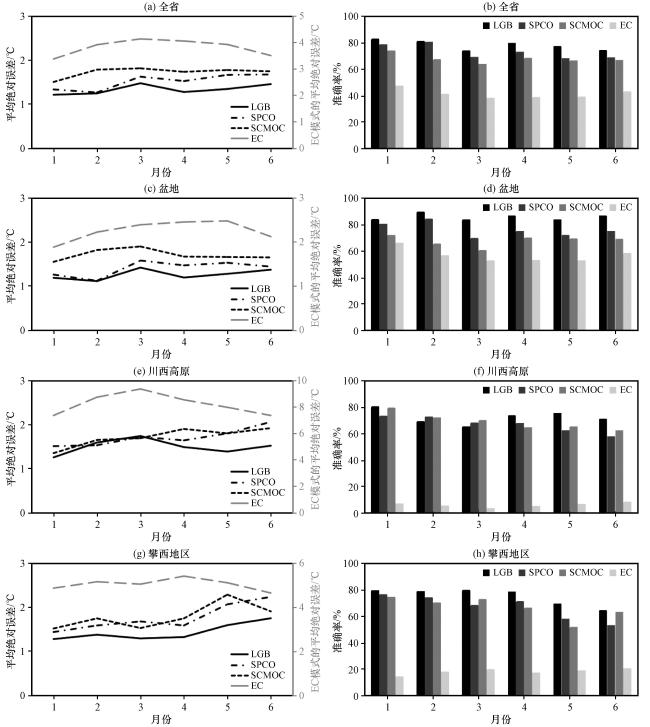
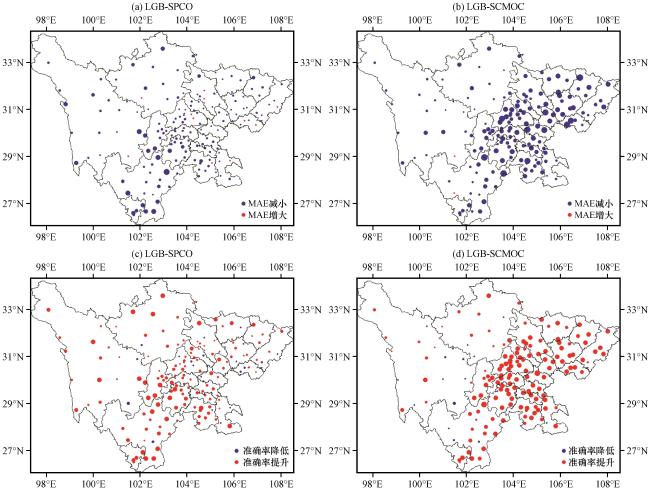
为了提高复杂地形区域的 2 m 高度最高气温预报精度,基于 LightGBMLight Gradient BoostingMachineLGB)算法针对四川盆地及其周边的复杂地形,开展了2 m最高气温的梯度建模研究。通过对多个气象要素和地形因子的选取与分析,构建了最优模型。研究表明:(120241-6月,LightGBM模型相比EC模式,平均绝对误差减少了2. 48 ℃,预报准确率提高了36. 97%。其中,川西高原和攀西地区的提升效果最为显著,准确率分别提高了67. 2%57. 5%。(2)与现有的客观预报产品SPCOSCMOC相比,LightGBM模型的预报准确率分别提升了5. 1%10. 3%。尤其在攀西地区和四川盆地,个别站点的预报效果提升最大,分别达 17. 6% 23. 4%。(3LightGBM 模型按月的平均绝对误差减少了 2. 05~2. 78 ℃,准确率提升了31. 1%~41. 0%,其中4月的提升效果最为显著。(4LightGBM模型具备良好的扩展性,未来可通过引入时间滞后效应、空间邻域特征,并结合分区建模与多模型集成,进一步提高四川省及其各区域的气温预报精度。

本文引用格式

周秋雪, 冯良敏, 陈朝平, 胡 迪 . 一种适用于复杂地形下最高气温订正的机器学习方法[J]. 高原气象, 0 : 1 . DOI: 10.7522/j.issn.1000-0534.2025.00027

Abstract

To enhance the prediction accuracy of the 2-meter maximum temperature in complex terrain areasthis study developed a gradient modeling approach based on the LightGBMLight Gradient Boosting MachineLGBalgorithmapplied to the Sichuan Basin and its surrounding regions. By selecting and and analyzing multiple meteorological and topographic factorsan optimized model was constructed. The results demonstrate that: (1From January to June 2024the LightGBM model reduced the mean absolute error by 2. 48 ℃ and improved the forecast accuracy by 36. 97% compared to EC model. Among themthe improvement effect of the west Sichuan Plateau and Panxi area was the most significantthe accuracy rate increased by 67. 2% and 57. 5%respectively.2Compared with the existing objective forecast products SPCO and SCMOCthe LightGBM model im‐ proved prediction accuracy by 5. 1% and 10. 3%respectively. Particularly in the Panxi area and the Sichuan Ba‐ sinthe accuracy at individual stations improved by up to 17. 6% and 23. 4%respectively.3The LightGBM model reduced the mean absolute error by 2. 05~2. 78 ℃and increased the accuracy by 31. 1%~41. 0%with the most notable enhancement occurring in April.4The LightGBM model exhibits strong scalability. Future work could further improve temperature prediction across Sichuan Province and other regions by incorporating time-lag effectsspatial neighborhood characteristicsand combining zoning modeling and multi-model integration.

文章导航

/