Not found 高原水文气象

青藏高原是亚洲水塔,其水文气象系统是我国生态安全屏障与水资源战略核心,在区域气候调节、水资源供给和生态稳定中发挥关键作用。为更好呈现高原水文气象相关成果,特推出《高原水文气象》虚拟专刊,聚焦高原气候演变、冰川冻土水文效应、大气-陆面-水文耦合模式、极端水文气象事件、水圈-气候相互作用等核心议题,整合观测、模拟与机制研究进展,揭示气候变暖背景下高原水文气象演变规律与潜在风险,为高原生态保护、水资源管理、防灾减灾及双碳目标实施提供科学支撑,推动高原水文气象学科融合创新与高质量发展。

Default Latest Most Read  
Please wait a minute...
For Selected: Toggle Thumbnails
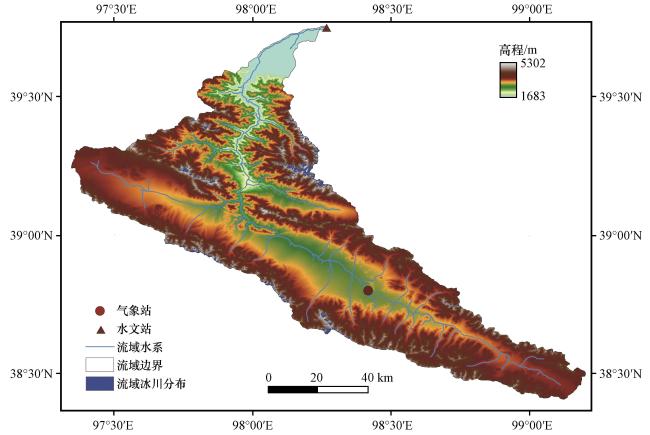
  • The Applicability of Gridded Products for Streamflow Simulation in the Taolai River Basin
  • Dekui KANG, Kaiqing LIU, Jianhua SI, Baolong MA, Bing JIA, Haiyang ZHU, Yongbao LIU, Chunlin WANG
  • 2026, 45 (2): 599-612. DOI: 10.7522/j.issn.1000-0534.2025.00077
  • Abstract (1650) PDF (9604KB)(68)
  • Gridded precipitation, potential evapotranspiration (PET), and land surface temperature (LST) datasets provide valuable alternatives for hydrologic modeling in ungauged areas.However, their performance in specific regions requires further investigation.This study evaluates six gridded precipitation products (CHIRPS, CMORPH, GPM, GSMaP, MSWEP, and PERSIANN), three PET products (GLDAS, GLEAM, and ERA5-Land), and one LST product (MOD11A1) in the Taolai River Basin.The effects of different precipitation and PET inputs on actual evapotranspiration (AET) and soil moisture were also analyzed.The results indicate that runoff simulations vary significantly depending on the precipitation product used.GPM and MSWEP perform best, achieving Nash-Sutcliffe efficiency (NSE) values of 0.58 and 0.54, respectively, during the validation period.These two products are reliable alternatives for precipitation sources in data-scarce scenarios.In contrast, the selection of PET products exhibits limited impact on runoff simulations, with the NSE values ranging from 0.61 to 0.74.If runoff simulation accuracy is the primary concern, the GLDAS, GLEAM, and ERA5-Land products are suitable substitutes.Additionally, when surface temperature data are unavailable, the MOD11A1 product achieves an NSE of 0.61 during the validation period.For scenarios with no meteorological observations, combining GPM or MSWEP precipitation data with any of the three PET products and MOD11A1 yields NSE values exceeding 0.53 in both calibration and validation periods.This study confirms that gridded datasets can partially mitigate hydrological simulation challenges in data-scarce regions, while recommending expanded applicability assessments across more basins to enhance reliability.

  • Simulation and Prediction of Hydrological Element Change in the Upper Reaches of the Heihe River based on SWAT+ Model
  • Xuan ZHANG, Rui ZHU, Zhenliang YIN, Zexia CHEN, Chunshuang FANG, Lejie LI
  • 2025, 44 (6): 1473-1487. DOI: 10.7522/j.issn.1000-0534.2025.00028
  • Abstract (1376) PDF (5898KB)(101)
  • In the context of global warming, it is of great significance to clarify the change characteristics and trends of hydrological elements in the mountainous areas of inland river basins to ensure water resource security.In this study, the spatiotemporal variation of hydrological elements under four scenarios, SSP1-2.6, SSP2-4.5, SSP3-7.0 and SSP5-8.5, was predicted with the SWAT model and the collective average data of five global climate models in CMIP6.The results showed that: (1) The evaluation coefficient of the SWAT model was higher in the calibration period (NSE=0.92, R 2=0.93, PBIAS=-7.09%) and validation period (NSE=0.89, R 2=0.91, PBIAS=4.74%), indicating that SWAT had good applicability in the simulation of runoff in the upper reaches of the Heihe River Basin.(2) Under the four scenarios, the runoff from the mountains in the future will increase by 12.2%, 8.1%, 10.4% and 19.2% respectively compared with the base period, and the runoff will increase significantly in autumn and winter.In the near and far future, the increase in the average total water yield in the basin is between 6.2~25.4 mm (22.2~35.7 mm), and the increase in the average underground flow is 1.6~7.4 mm (7.4~12.1 mm), and the increase of each hydrological element is greater in the far future.(3) In terms of the spatial distribution of hydrological elements, the spatial distribution of precipitation, evapotranspiration, surface production and underground runoff increased from northwest to southeast, while the total water yield and lateral flow were high in the middle and low in the north.(4) The spatial distribution pattern of the changes of each hydrological element is quite different, and the spatial distribution difference of the change of hydrological elements between different scenarios in the near future (2021 -2060) period is relatively small, and the difference in the temporal and spatial distribution of the change in the far future (2061 -2100) is even greater.In conclusion, the SWAT model can better describe the temporal and spatial changes of hydrological processes and hydrological elements in the mountainous areas of inland river basins.

  • A Comprehensive Review of the Application Research of the WRF- Hydro Fully Coupled Atmosphere-Land-Hydrology Model
  • Zhenjie LI, Xianhong MENG, Lele SHU, Lin ZHAO, Zhaoguo LI, Mingshan DENG, Yaling CHEN, Hao CHEN
  • 2024, 43 (4): 809-825. DOI: 10.7522/j.issn.1000-0534.2024.00040
  • Abstract (1786) PDF (2187KB)(947)
  • Numerical models have risen to prominence as indispensable tools for the in-depth study of the water cycle and these extreme hydrological phenomena, gaining widespread application across the globe.To delve into the spatiotemporal evolution patterns of global terrestrial water circulation against the backdrop of climate change and to decipher the intricate feedback mechanisms among atmospheric, land, and hydrological systems, the exploration of coupled atmospheric-land-hydrological models has emerged as a pivotal area of focus in the international research landscape dedicated to atmospheric and hydrological studies.This paper embarks on its journey by meticulously reviewing and delineating the evolution of coupled models, shedding light on the distinct advantages of the Weather Research and Forecasting Model Hydrological (WRF-Hydro) modeling system.It methodically dissects the primary sensitivity parameters of the WRF-Hydro model, while extensively covering its applications in analyzing surface runoff, soil moisture, the energy-water cycle, and the intertwined atmospheric and hydrological processes.The discourse culminates in a forward-looking exploration of the future directions in the development of the WRF-Hydro coupled model.Emphasizing strategic advancements, the paper advocates for a concerted effort towards the creation of robust scale conversion schemes, the refinement of parameterization methods, and the execution of high-resolution simulations.These simulations are crucial for accurately mapping the spatial and temporal dynamics of atmospheric and hydrological variables within basins, thereby significantly enhancing the model's capacity to intricately depict the interactions among atmospheric conditions, land surface phenomena, and hydrological processes.This comprehensive approach underlines the imperative to deepen our understanding and improve our modeling capabilities, aiming at a more effective prediction and management of the impacts arising from climate change and extreme hydrometeorological events.

  • Eco-hydrological Effects of Photovoltaic Power Generation Facilities on Dryland Ecosystems: A Review
  • Chu;ong WU;Zebing SU;Hu LIU;Wenzhi ZHAO
  • 2021, 40 (3): 690-701. DOI: 10.7522/j.issn.1000-0534.2020.00065
  • Abstract (2780) HTML (255) PDF (1561KB)(826)
  • Arid and semi-arid regions are characterized by low annual rainfall and high solar radiation, which, together with plentiful land supplies and clear sky conditions, result in an ideal area for developing photovoltaic industry.However, both the construction and operation processes of photovoltaic facilities may put substantial influences on the fragile dryland ecosystems by changing the spatial pattern of local environmental variables (e.g., radiation and rainfall).This paper reviewed those potential impacts of photovoltaic facilities on the dryland ecosystems from the perspectives of local microclimate, eco-hydrological processes, regional ecological pattern, and energy conservation and emissions reduction, and summarized the related research progresses in understanding the eco-environmental effects of photovoltaic generation systems on the local and regional environments during past decades.It was pointed out that the microclimate, soil temperature and humidity between photovoltaic arrays could be improved by photovoltaic facilities in dryland ecosystems, which in turn, may increase the local vegetation coverage and carbon sequestration potential.However, photovoltaic generation systems are also likely to negatively impact the local environments, e.g., destroying animal habitats, limiting their food availability, lowering the regional biodiversity and even threating dryland ecosystem stability.The review indicates that ongoing and future researches should be oriented towards the multi-scale temporal-spatial understanding of the influence of widely-deployed photovoltaic system on dryland ecosystems, through extending the observation scales, and improve the modeling capabilities.Special focus should be put on the development of mechanism-based models for the ecohydrology of dryland environments affected by photovoltaic facilities, and the development of "cross-border integrated" photovoltaic system protocols.
  • Response of Extreme Hydrological Events to Extreme Climate in the Shule River Basin
  • CHENG Yufei;CHENG Wenju;HU Xiangquan;ZHAO Jinyan
  • 2019, 38 (3): 583-592. DOI: 10.7522/j.issn.1000-0534.2019.00027
  • Abstract (1202) HTML PDF (3790KB)(590)
  • In order to clarify the response of extreme hydrological events to extreme weather events in the Shule River Basin, the daily value data of temperature, precipitation and evaporation in the Shule River Basin and its surrounding meteorological stations, such as Tuole, Dunhuang, Guazhou, Yumen, Jiuquan and Mazongshan, are selected, the daily runoff data of the Changmabao Hydrological Station is also selected. Through the methods of trend analysis, moving average and principal component analysis, this study analyzed the extreme climate indices, the interannual variation law of extreme hydrological events and the factors affecting extreme hydrological events in Shule River Basin, and clarified the annual distribution characteristics of extreme floods in the basin. The results show that the interannual temperature rises in the Shule River Basin is obvious, the precipitation fluctuations change, there is no obvious increasing trend, and the evaporation shows a downward trend. The extreme temperature indices indicating high temperature showed a significant upward trend, and the extreme temperature indices indicating low temperature showed a significant downward trend, indicating that the temperature in Shule River Basin increased significantly. The extreme precipitation indices showed an significant increase. The extreme flood events and frequency in this basin showed an upward trend, while the extreme dry events and frequency showed a downward trend. Extreme flood events are mainly controlled by extreme precipitation events, especially the total amount of extreme precipitation. Extreme high temperature events also affect the increase of the total amount of extreme flood, while extreme dry events are mainly controlled by extreme low temperature events. In addition, the occurrence time of the largest peak flow in 2000-2016 has advanced from August to July.
  • Relationship between Runoff at Tangnaihai Hydrological Station and Beat Vortex in the Source Regions of Yellow River
  • DING Xiaojin;GAO Xiaoqing;TANG Maocang;WANG Tiantian;LIANG Feng
  • 2014, 33 (3): 861-867. DOI: 10.7522/j.issn.1000-0534.2014.00047
  • Abstract (1309) PDF (880KB)(838)
  • Using daily mean runoff data at Tangnaihai hydrological station from 2002 to 2011 and earthquake records in East Asia, the series of beat vortex intensity index in the source region of Yellow River were calculated, and the relationship between the beat vortex index and the runoff at Tangnaihai hydrological station has been analyzed, aimed at searching the changes of underground thermal activity that control the flood discharge in the flood season, at affording warranty to the short-term forecasts of runoff, and at programming the use of water resources and preventing floods and drought in the upper reaches of Yellow River. The results show that the beat vortex has good correspondence to the abundant runoff with daily mean runoff anomaly percentage ≥50%, the time differences between the starting date of the abundant runoff period and the data of the beat vortex are mostly within a week, there is a positive correlation coefficient between the mean runoff during the abundant runoff periods and the beat vortex intensity indexes(α=0.01). It is of great significance to understand the coupling between earth and atmosphere.
  • Numerically Test of Influence of Incorporation of TOPMODEL into Land Surface Model SSiB on Hydrological Simulation at Basin Scale
  • 刘惠民;邓慧平;孙菽芬;肖燕
  • 2013, 32 (3): 829-838. DOI: 10.7522/j.issn.1000-0534.2012.00076
  • Abstract (810) PDF (1105KB)(762)
  • In order to examine and analyze the effects of integration of land surface model SSiB with TOPMODEL on hydrological simulations, the coupled model (hereinafter SSiBT) which partitions the catchment into saturated and unsaturated zones is used to conduct hydrological simulations at basin scale using data from the Qingyijiang basin. By assessing SSiBT outputs against original SSiB outputs and using observational data sets of daily runoff and water balance of the basin the responses of hydrological simulations to incorporation of TOPMODEL into original SSiB are analyzed and the reasons for such responses are investigated. The study shows that comparing with the results from original SSiB simulations, the coupled model SSiBT predicts more strong vertical changes in soil wetness, higher soil wetness and evaporation and lower total runoff. The study also indicates that original SSiB produces unrealistic partition of runoff between surface runoff and baseflow. When the soil saturated hydraulic conductivity at surface is taken a small value it produces more unrealistic surface runoff and flood discharge while it produces more unrealistic baseflow and much lower flood discharge when the soil saturated hydraulic conductivity at surface is taken a large value. The study also shows that even if the value of soil saturated hydraulic conductivity at surface is so large that there is no overland flow, SSiBT still produces high enough flood runoff during the flood period. Because SSiBT can represent saturated area in the basin resulting from horizontally variations of soil moisture due to topography, it improves simulations of flood runoff during raining season.
  • Characteristic Analyses on Hydrological and Related Meteorological Factors on the North Slope of Mount Qomolangma
  • 王忠彦;马耀明;刘景时;韩存博
  • 2013, 32 (1): 31-37. DOI: 10.7522/j.issn.1000-0534.2012.00004
  • Abstract (1135) PDF (884KB)(815)
  • The characteristics of air temperature, precipitation, water surface evaporation, soil temperature and soil moisture have been analyzed using the observational data from 2008 to 2011 at Qomolangma station for Atmospheric and Environmental Observation and Research, Chinese Academy of Sciences. A brief results of the influence of the air temperature and precipitation on runoff have been analyzed using the measured data at gauging station in Rongbuk River during ablation period in 2010. Annual mean air temperature at Qomolangma station is 4.3 ℃, the  daily temperature range of air temperatures in winter half year is greater than that in summer half year. Average annual precipitation is 213.4 mm, which concentrates in July and August, its interannual variation is large. Annual water surface evaporation is 2 104 mm, and it is larger in summer than in winter, the largest water surface evaporation happen in June. During ablation period of Rongbuk River runoff, the air temperature dominates runoff and they have a good positive correlation. Precipitation can reduce runoff on the same day, especially the precipitation smaller than 10 mm has apparent negative impact on runoff on the same day.
  • Influences of Two Patterns of El Nio on Hydrological andMeteorological Elements in Hexi Corridor Region of China
  • 秦甲;丁永建;叶柏生;王雁
  • 2011, 30 (5): 1279-1285.
  • Abstract (558) PDF (777KB)(706)
  • Based on the distinguish of the two types of El Nio events, the correlations between precipitation, temperature and runoff and El Nio were analyzed by running mean, respectively. And the changes of the temperature, precipitation and runoff from mountainous watershed of Hexi Corridor region caused by the two types of El Nio from 1959 to 2005 were studied by anomaly analysis method. The result is that Hexi Corridor region is strongly influenced by the El Nio. Temperature raising, precipitation and runoff decreasing are the features in the first pattern of El Nio event, but temperature decreasing, precipitation and runoff raising in the second one.The responses of temperature to El Nio events are stronger in plain than mountain regions, the responses of precipitation to El Nio are obvious in both mountain and plain regions. The response of runoff to El Nio is lower than precipitation and air temperature because the runoff from mountainous watershed has a complex generate and concentrate process.
  • 金塔绿洲解放村水库夏季晴天水文气象效应的数值模拟
  • 赵林-;陈玉春;吕世华;孟宪红;李万莉-;李江林-
  • 2010, 29 (6): 1414-1422.
  • Abstract (431) PDF (1251KB)(1047)
  • Jiefangcun reservoir is a small reservoir with areaabout 6 km2, located inthe southern edgeof Jinta oasis, its hydrometeorologicaleffect in fine day of summer was simutated by using the nonhydrostatic mesoscale model(RAMS).The main results show:(1) Although areaof Jiefangcun reservoir is small, but there is obviouswarm (cold)lake effect, wet island effect and lake breeze. (2) In sensitivity test, fromthe differencein daily average potential temperature with and without the reservoirs, it shows that the reservoir has cooling effect and the largest decreaseis 2.2℃. (3) In the differencein daily average horizontal wind with and without the reservoirs, itindicates that reservoir has an acceleration effect to wind field and the largest increase is 1.4 m·s-1. (4) The west\|east vertical cross\|section of difference of absolute humiditywith and without the reservoirs, itindicates that thereservoir absolute humidity approaches to theland,within 300 m on the windward shore and about 3 km onthe leeward shore, the top altitude where water body may affect air absolute humidity isabout 650 m.
  • Analysis on Drought Variation over 10 Hydrological Regions in China during 1951-2005
  • WANG Zhi-wei;ZHAI Pan-mao;WU Yong-li
  • 2007, 26 (4): 874-880.
  • Abstract (773) PDF (745KB)(493)
  • Based on the monthly precipitation data of 629 stations during 1951 to 2005,drought variations over China's 10 main hydrological regions were analyzed using Z index calculations.The results revealed that evident expanding trends in drought area were detected in the Songhuajiang River,the Huaihe River,and the Haihe River basins.However,the areas of drought showed no significant increasing or decreasing trends in the region of the Yangtze River,the Zhujiang River,the Southwest Rivers,and the Southeast Rivers basins,and decreasing trend was found in Northwest Rivers basin.Interdecadal and decadal variations were distinct for all the 10 hydrological regions.Interannual variations were large for the Huaihe River,Haihe River and the Liaohe River basins,and it was small for the Southwest Rivers and the Yangtze River basins.Since 1990's,drought areas rapidly increased in the Songhuajiang River,Liaohe River,Haihe River and the Huaihe River,but began to decrease since the early 2000's.According to the analyses of linear trends and secular variations,it was predicted that drought areas would likely to decrease in early 2000's for the Haihe River,the Liaohe River,the Songhuajiang River,the Huaihe River,the Northwest Rivers and the Yellow River basins due to the increases of precipitation.In contrast,the Southeast Rivers and the Zhujiang River would likely to face increases of drought coverage because of less rainfall amounts.And there are no obvious changes in drought for the Yangtze River and the Southwest Rivers basins.
  • Simulation of Influence of Climate Change on Water Resource over Luanhe River Valley Using a Hydrological Model(Ⅱ):Simulated Result Analyses
  • FAN Guang-zhou;Lü Shi-hua;CHENG Guo-dong
  • 2001, 20 (3): 302-310.
  • Abstract (548) PDF (358KB)(416)
  • The influence of the climate change on the water resource of the different season in rainy year and drought year over Luanhe river valley was studied by using the precipitation-runoff modeling system. The results show that the air temperature mostly effect the evaporation of Luanhe river valley. And the influence of precipitation on the evaporation is comparatively less. The change absolute value of evaporation in humid season is greater, and its change percentage in arid season is greater. But the surface runoff, subsurface runoff, ground water and runoff are mostly effected by precipitation. The temperature influence on them is comparative less. And it is more sensitive in humid season than in arid season.
  • A SET OF SOFTWARE FOR HYDROMETEOROLOGICAL DATA CONSULTING AND GRAPH DISPLAYING
  • MA Zhen-hua;LI Gui-chen
  • 1999, 18 (4): 678-680.
  • Abstract (717) PDF (117KB)(650)
  • A set of software for hydrometeorological data consulting and graph displaying is introduced.Data consists of runoff records of 30 hydrometric stations in North China in past years,also of rainfall and temperature records over past 40 years in 160meteorological stations in China.The software is easy to operate.Some statistics of data is also provided.
  • APPLICATION OF DUAL-POLARIZATION RADAR IN HYDROLOGICAL FORECAST——A DEVELOPMENT OF HYDROLOGICAL FORECASTING SYSTEM
  • LIU Liping;QIAN Yongfu;WANG Zhijun
  • 1996, 15 (4): 508-514.
  • Abstract (785) PDF (250KB)(419)
  • Based on the data of stream flow and rainfall from hydrological and raingauge stations in Bajiazui reservoir from 1980 to 1987,the model of automatic and real-time hydrological forecast was developed,which used the dual-polarization radar data observed in Pingliang Radar Station,Lanzhou Institute of Plateau Atmospheric Physics,Chinese Academy Sciences When the computer in office of flood control received the radar data sent by radio,the model could forecast the hydrological parameters,including total amount of rainfall,run-off,outflow rate,stream flow of the peak of flood,the time of peak,displaying and printing these parameters Comparison with conventional forecast method,this forecast model with radar was accuracy,real-time,especially for storms The model provided basic data for the anti-flood direction and flood controlling In this paper,a new and advanced science and technology in meteorology was used in hydrology The work developed the applied range of meteorological radar.